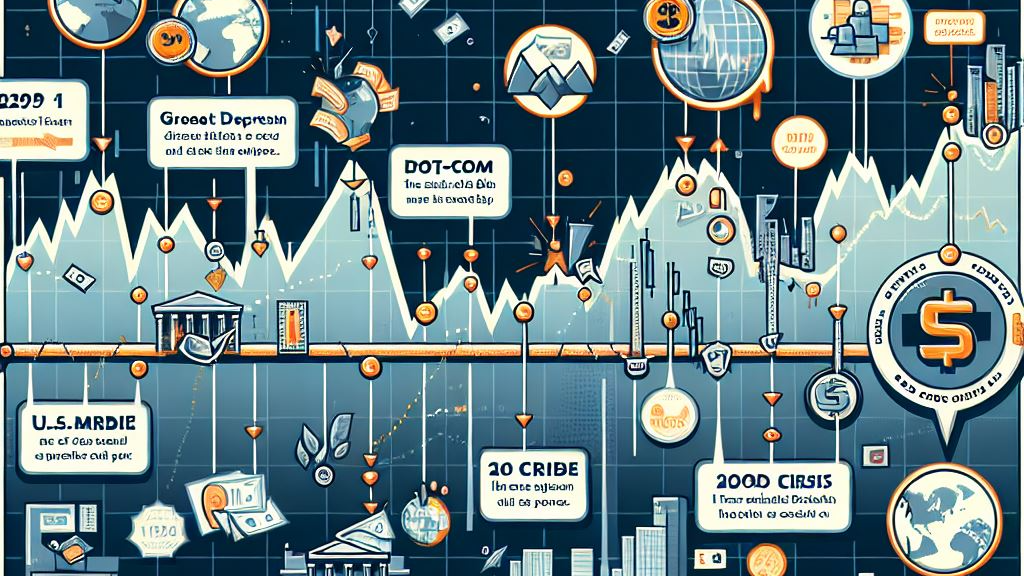
1. Understanding Market Trends

Market trends refer to the general direction in which a market or sector is moving over time. These trends can be upward (bull markets), downward (bear markets), or sideways (range-bound). Analyzing historical market trends helps identify patterns that can inform decision-making in investing, business strategy, and economic policy.
2. Key Historical Economic Shifts
– The Great Depression (1929)
One of the most significant economic shifts in history, the Great Depression, began with the stock market crash of 1929 and lasted throughout the 1930s.
- Impact: Unemployment soared, banks failed, and consumer confidence plummeted. The global economy contracted, leading to widespread poverty and hardship.
- Lesson Learned: The importance of regulatory oversight became clear. In response, governments implemented measures such as the Securities Exchange Act and the establishment of the Federal Deposit Insurance Corporation (FDIC) to restore confidence in the financial system.
– The Post-World War II Economic Boom (1945-1960s)
Following World War II, many economies experienced rapid growth, particularly in the United States.
- Impact: Increased consumer spending, technological advancements, and the expansion of the middle class characterized this period. Industries such as automotive and housing flourished.
- Lesson Learned: Economic growth can be driven by consumer demand and innovation. Investing in infrastructure and education can lead to long-term prosperity.
– The Oil Crisis of the 1970s
The oil embargo imposed by OPEC in 1973 led to skyrocketing oil prices and economic turmoil in many countries.
- Impact: Inflation surged, and economies faced stagflation (a combination of stagnant growth and high inflation). Energy-dependent industries struggled, while consumers faced rising costs.
- Lesson Learned: The crisis highlighted the vulnerabilities of over-reliance on a single resource. Diversification of energy sources and investments in alternative energy became critical for economic stability.
– The Dot-Com Bubble (Late 1990s)
The late 1990s saw a rapid rise in internet-based companies, leading to speculative investments and inflated valuations.
- Impact: The bubble burst in 2000, resulting in significant losses for investors and the collapse of many tech companies.
- Lesson Learned: The importance of due diligence and sustainable business models became evident. Investors learned to be cautious of hype and to focus on fundamentals rather than speculation.
– The Global Financial Crisis (2007-2008)
The collapse of the housing bubble and subsequent financial crisis had far-reaching effects on the global economy.
- Impact: Major financial institutions failed, leading to massive government bailouts and significant economic downturns worldwide. Unemployment rates soared, and consumer confidence plummeted.
- Lesson Learned: The crisis underscored the need for regulatory reforms in the financial sector, emphasizing the importance of risk management and transparency in financial practices.
3. Current Market Trends and Lessons Learned
Drawing from historical economic shifts, several current market trends can be analyzed:
– Rise of Technology and E-Commerce
The COVID-19 pandemic accelerated the shift toward digitalization and e-commerce, transforming consumer behavior and business operations.
- Lesson from History: Just as the post-WWII boom was fueled by innovation, today’s economic recovery is heavily reliant on technology. Businesses that adapt to digital trends and invest in technology are likely to thrive.
– Focus on Sustainability
Increasing awareness of climate change has led to a growing emphasis on sustainable practices and green technologies.
- Lesson from History: Similar to the diversification of energy sources post-1970s oil crisis, businesses today must adapt to changing consumer preferences and regulatory pressures regarding sustainability to remain competitive.
– Global Supply Chain Challenges
Recent disruptions in global supply chains, exacerbated by the pandemic, have highlighted vulnerabilities in manufacturing and logistics.
- Lesson from History: The importance of resilience and flexibility in supply chains is crucial. Businesses must diversify suppliers and invest in local production capabilities to mitigate risks.
4. Conclusion
In conclusion, market trends history offers essential lessons that can guide current and future economic decisions. By studying past economic shifts such as the Great Depression, the oil crisis, the dot-com bubble, and the global financial crisis, we can gain insights into the factors that drive market dynamics and the importance of adaptability. As we navigate today’s rapidly changing economic landscape, these historical lessons remind us of the need for vigilance, innovation, and a proactive approach to managing risks and opportunities. Understanding market trends history not only helps us learn from the past but also equips us to make informed decisions for a more sustainable and prosperous future.